
Florida’s property tax cut: what Palm Beach buyers need to know
The new exemption can change a homeownership budget. Your residency, tax year and the property’s assessment determine how much it could help.
Facts checked November 10, 2026. Published guidance may change; check the sources below for updates.
The short answer
Florida voters approved Amendment 3, with changes beginning January 1, 2027. Eligible homesteads can receive a larger exemption from non-school property taxes. The measure does not change 2026 bills, and buyers establishing Florida residency after December 31, 2026 face different eligibility rules. Confirm your position with the county property appraiser.
Explore the details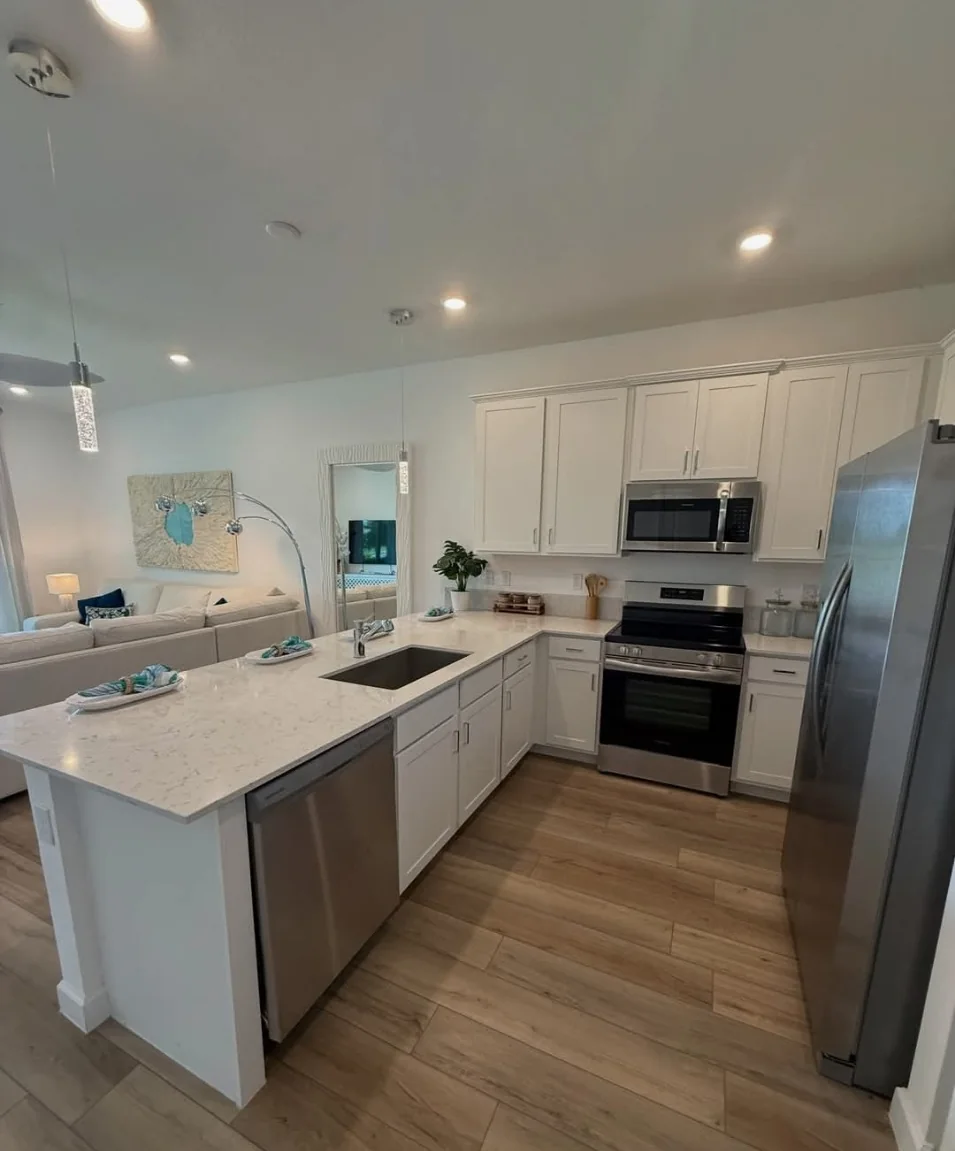
What changes in 2027 and 2028
The Florida Department of Revenue’s November 5 bulletin confirms voter approval and a January 1, 2027 start, first applying to the 2027 tax roll. This is a constitutional amendment, rather than an executive decree providing an immediate rebate. [1]
| Tax year | Non-school exemption for eligible established Florida residents | School-tax treatment |
|---|---|---|
| 2026 | The existing rules apply | The amendment does not change this bill |
| 2027 | Up to $150,000 of assessed value | The $25,000 school-tax exemption remains |
| 2028 | Up to $250,000 of assessed value | The larger exemption applies to non-school levies |
An exemption removes part of the value used to calculate applicable taxes. It is not a payment of $150,000 to a homeowner, and it does not mean that every qualifying owner saves the same amount. [3]
Your residency date matters as much as the home
The Senate summary distinguishes people who maintained Florida permanent residence by December 31, 2026 and establish homestead from people establishing residency later. For the later group, the non-school exemption initially remains up to $50,000, with access to the increased exemption beginning in the fifth year of receiving the exemption. [2]
Do not translate that into a universal rule that simply owning any Florida home for five years creates eligibility. Permanent residence, homestead qualification and the exemption history matter. The amendment also makes its residency treatment subject to the U.S. Constitution; implementation and future legal developments need to be checked. [3]
For someone comparing a move from another state with a move within Florida, this distinction belongs near the beginning of the budget conversation. A closing date alone should not be treated as proof of a particular exemption. Ask the county office how your own residency and ownership dates will be evaluated.
How to think about the possible savings
Start with the additional value that would actually become exempt for your property, then apply the relevant non-school tax rates. Use the county’s property-specific calculation for a real estimate. School taxes and other charges cannot simply be removed from the worksheet.
| Assumed input | Example |
|---|---|
| Additional assessed value becoming exempt | $100,000 |
| Applicable non-school tax rate, assumed unchanged | 10 mills, or $10 per $1,000 |
| Illustrative annual difference | $1,000 |
| Monthly budgeting equivalent | About $83.33 |
These assumptions demonstrate the calculation; they do not estimate your tax bill or represent published 2027 local rates. The additional exemption may be different for your property, and assessments, exemptions and rates can change. Even an annual tax saving does not establish the exact month an escrow payment will change.
What this means for a Palm Beach County home search
Use the same budget categories when comparing West Palm Beach, Palm Beach Gardens, Lake Worth, Boynton Beach or another area: principal and interest, completed-home property taxes, insurance, association charges and any applicable assessments. Match the tax estimate to the actual property and your circumstances.
A countywide change does not make two homes carry the same bill. Compare the property records and applicable taxing authorities instead of assigning one generic tax percentage to every city. Keep any expected exemption benefit separate until its application to the purchase has been confirmed.
The practical buying question is whether the home fits with a defensible ownership estimate. A tax headline should help you improve that estimate; it should not be the only reason a purchase appears affordable.
New construction still needs a completed-home estimate
Palm Beach County’s Property Appraiser explains that newly completed improvements are assessed at just value under the applicable assessment rules. A prior land-only bill or the builder’s previous assessment is not a complete projection of your future ownership cost. [5]
Ask for a budget based on the completed home and the exemptions for which you expect to qualify. Confirm what the lender includes in escrow. Separately identify association dues and any applicable non-ad valorem assessments, and check for charges already counted elsewhere.
If an offer includes a temporary mortgage payment subsidy, request the later payment too. Compare the home after the promotional period using a supported tax allowance. New construction and resale should go through the same full-cost comparison.
What about a second home or investment property
A second home or rental does not receive the larger primary-residence exemption merely because it is in Florida. The amendment separately reduces the annual assessment-growth cap for covered non-homestead property from 10% to 5%. That is a limit on qualifying assessment growth, not a 5% reduction in the bill. [2]
The enrolled text retains provisions covering changes of ownership and improvements. Before using an existing owner’s assessment to evaluate an investment purchase, ask the county how the acquisition and any planned work would affect the assessment. [3]
What to check before using the benefit in your plan
- Identify the tax year you are budgeting for; keep 2026 and 2027 separate.
- Confirm your residency and expected homestead eligibility with the county property appraiser.
- Request the completed-property estimate and identify which levies the exemption affects.
- Keep school taxes, association charges and applicable assessments in the comparison.
- Ask the lender when and how a revised tax estimate would affect escrow.
- Review the county’s current filing instructions and any updated implementation guidance.
Palm Beach County’s published homestead instructions require eligibility as of January 1 and an application by March 1 for the applicable year. Check the office’s current guidance for your situation and any amendment-specific updates. Buying a home and receiving an exemption are separate steps. [4]
Our team can help you compare homes and organize the information for your next conversation. The county property appraiser determines exemption eligibility; a tax professional can help with advice specific to your circumstances.
Your questions answered
Does Amendment 3 lower my 2026 property tax bill?
No. The Department of Revenue states that the amendment begins January 1, 2027 and first applies to the 2027 tax roll. [1]
Does Florida’s property tax cut eliminate school taxes?
No. The expanded homestead exemption applies to non-school levies. The enrolled amendment separately preserves the $25,000 school-tax exemption. [3]
Can a new Florida resident immediately claim the full increased exemption?
The amendment provides different treatment for people who were not Florida residents by December 31, 2026, with increased-exemption eligibility beginning in the fifth year of exemption. Confirm current implementation and your eligibility with the county. [1]
Will the same new home cost less every month?
The result depends on the applicable tax calculation, your exemption eligibility, other ownership costs and the lender’s escrow handling. Obtain a property-specific estimate before counting on a lower monthly payment.